A Century of Life, Family, and Service to Tuttle
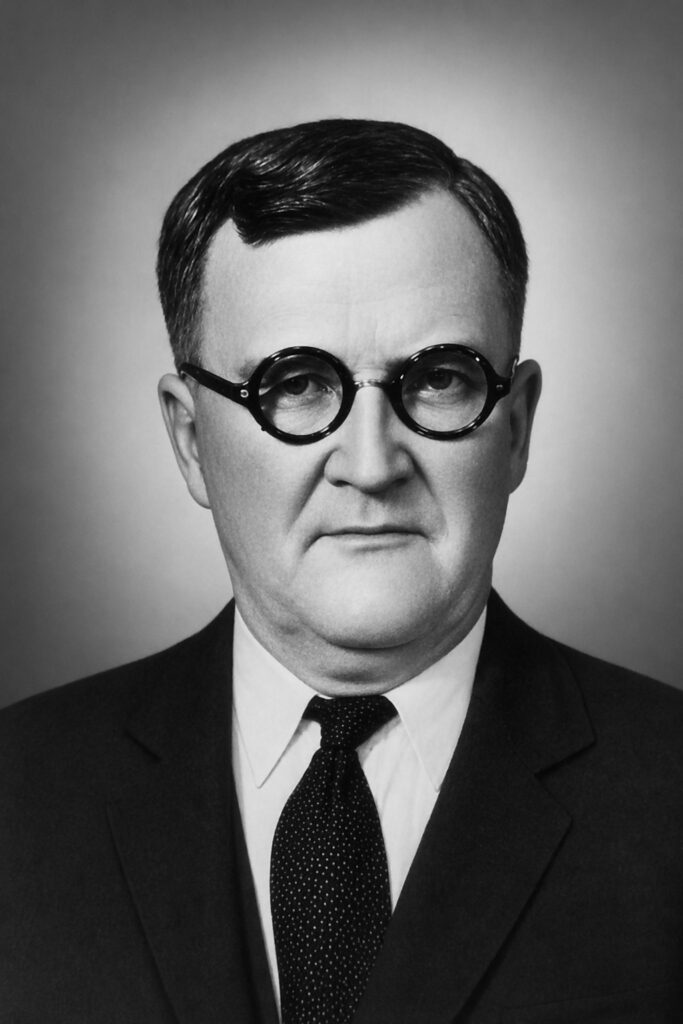
1904-1939
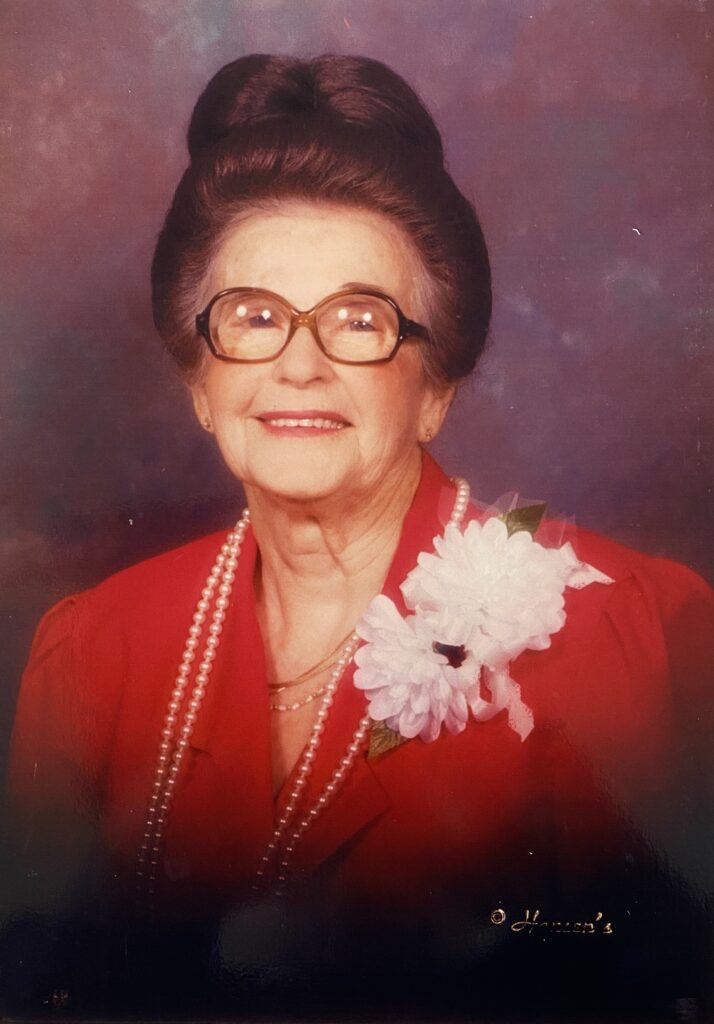
1899-2001
Few people witnessed as much of Tuttle’s history as Eula Copp Bowers, who lived an extraordinary 101 years.
Eula was born on October 26, 1899, in Indian Territory near Newcastle, Oklahoma, to Tom H. “Tack” Copp (1873–1952) and Lora Alma (Williams) Copp (1877–1951). At the age of six, she moved with her family to the Tuttle area, where she would spend the rest of her life. She passed away in Tuttle on January 25, 2001, at the age of 101.
Eula first married Johnnie W. Cobble (1888–1918). Tragically, Johnnie died during the influenza epidemic of World War I while Eula was expecting. They had two sons John and Doris Lavern “Hunk” Cobble.
Family members recalled a touching story about the naming of that child. While awaiting his birth, Eula and Johnnie had chosen the name Doris Laverne if the baby were a girl. Before they could decide on a boy’s name, Johnnie passed away. When the child was born and turned out to be a boy, Eula honored their decision and named him Doris Laverne “Hunk” Cobble (1919–2007). Friends later gave him the nickname “Hunk,” a name by which many knew him throughout his life.
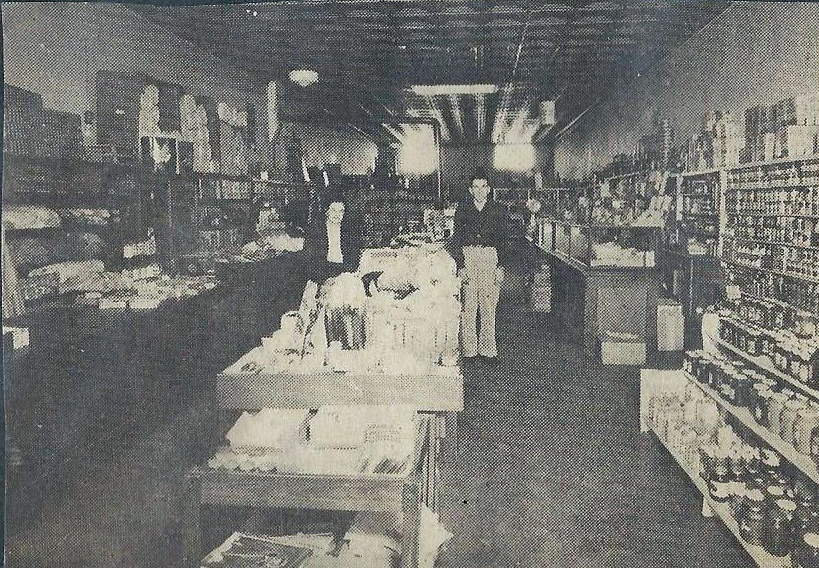
Raymond John Bowers (1904-1939) was a businessman who helped shape early downtown Tuttle. In 1920, he and hardware merchant Norman Parker opened Parker and Bowers Store next to the Bank of Tuttle on Main Street.
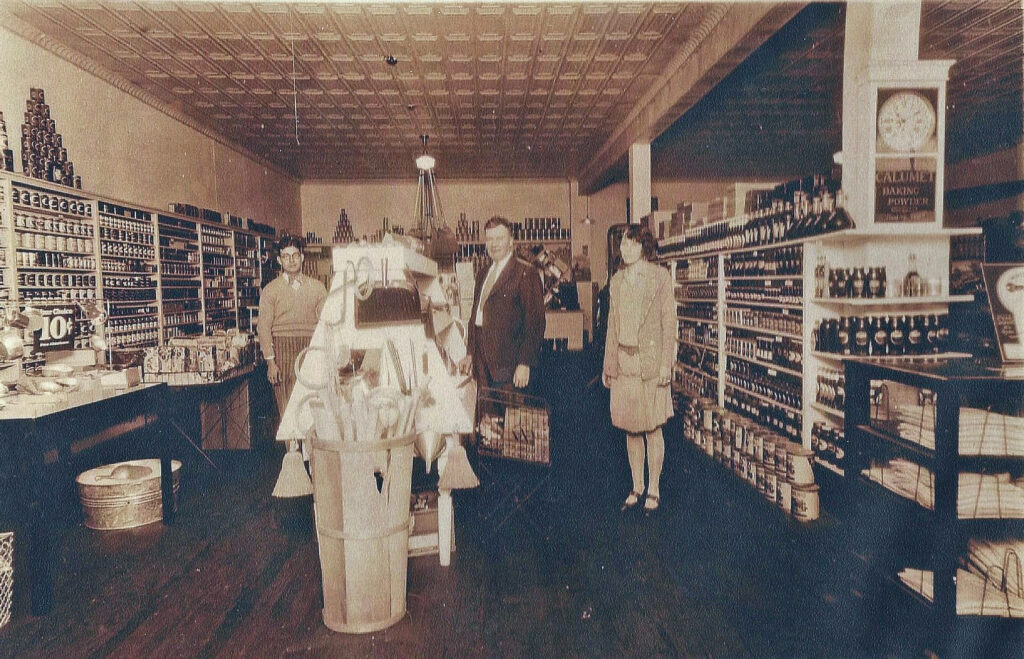
(Photo courtesy of Mrs. Eula Bowers of Tuttle)
As a young widow with a child to support, Eula went to work in Mr. Bowers’ store. What began as a job became a lifelong career, and she would spend the next fifty years serving customers in Tuttle.
In 1924, Eula married Raymond, together they had three children: Maxine Bowers Jeffries (1928–2015), Jimmy Ray “Jim” Bowers Sr. (1934-2023), and Helen Louise Bowers Greenroyd.
Raymond had previously been married to Susie N. Newton (1879–1934) and was the father of Ruby Lee Bowers Ikard (1902–1994) and Luther Williams Bowers (1904–1986).
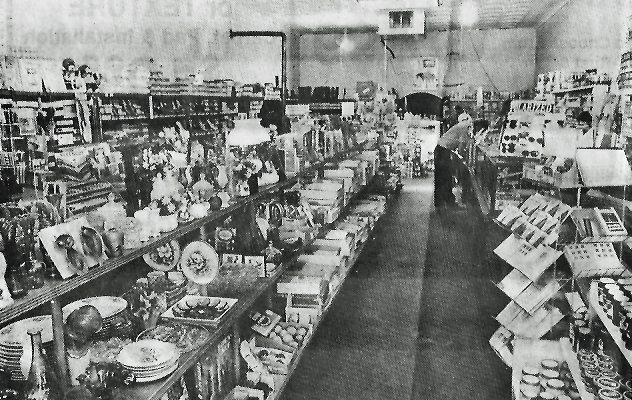
The business eventually became simply Bowers Store and remained a fixture in the community for more than sixty years. The Bowers store offered groceries, meats, vegetables, dry goods, jeans, and shoes. It moved a couple of times thru the years, In 1926, it moved to the north side of Main Street. Six years later, it relocated to the former City Hall site at the northwest corner of Main Street and Southwest Third Street.
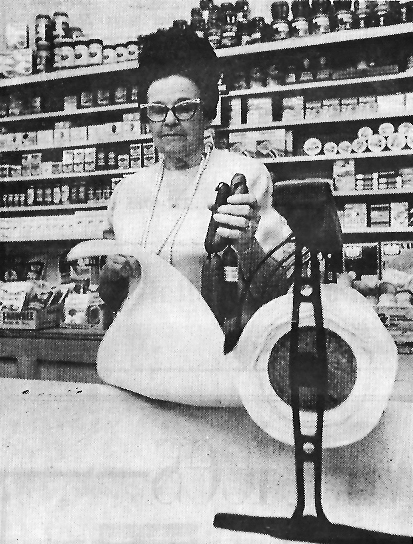
When Raymond died in 1939, Eula once again found herself responsible for supporting a large family. Rather than close the business, she kept it operating. She expanded the store’s offerings by adding gifts and novelties and later moved it to the building just west of Star Pharmacy.
Reflecting on those years, Eula once said:
“I had six children to support, so I just tried anything that seemed like it would sell.”
That practical approach may have been the secret to her success. Eula listened to her customers and worked hard to meet their needs. Her dedication helped keep the business thriving for decades.
When she retired in 1974, Eula still fondly remembered her customers and the many years she spent behind the store counter. Through hard work, perseverance, and an unwavering commitment to her family and community, she became one of Tuttle’s most beloved and respected citizens.
Special Note:
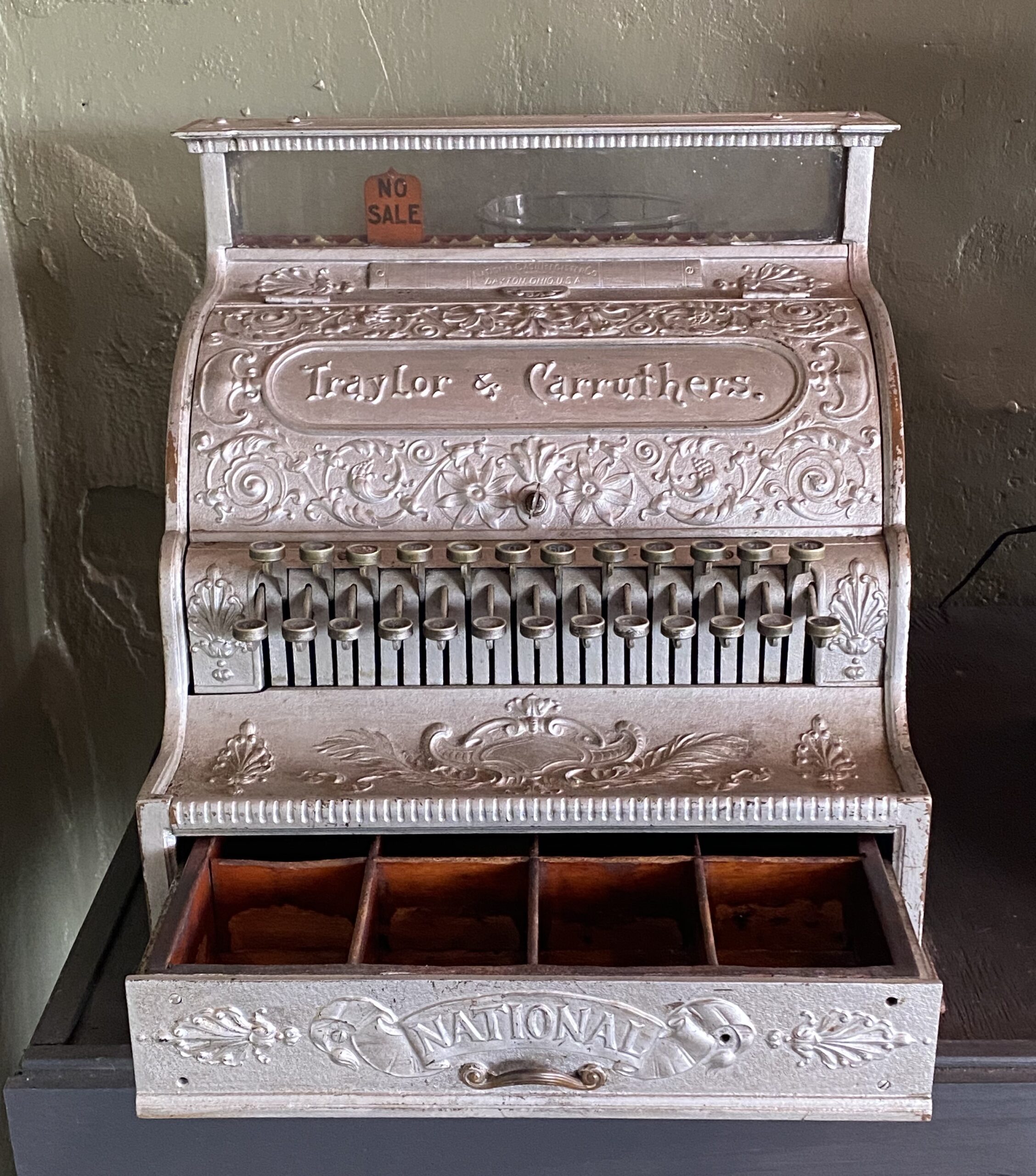
The National Cash Register above was used in the Bowers store during their years in business. It is 1901 Detail Adder or a 300-Class (specifically a variant of the Model 35 or 33) machine. These are detail adders that use a key-driven mechanism rather than a crack. The machine features an elaborate arabesque pattern, embossed marquee, and custom Traylor & Carruthers” engraving on the top housing. This detail represents the name of the original business owners or the specific establishment that purchased the machine. During the late 1800s and early 1900s, the National Cash Register Company commonly cast personalized nameplates or brass breastplates for merchants. This acted as both a theft deterrent and a point of pride for a shop.
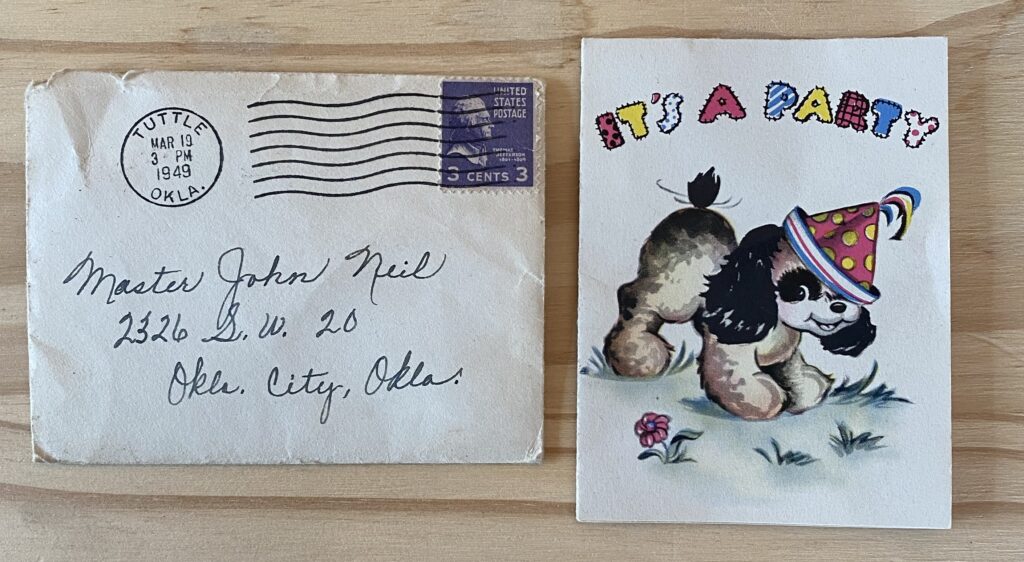
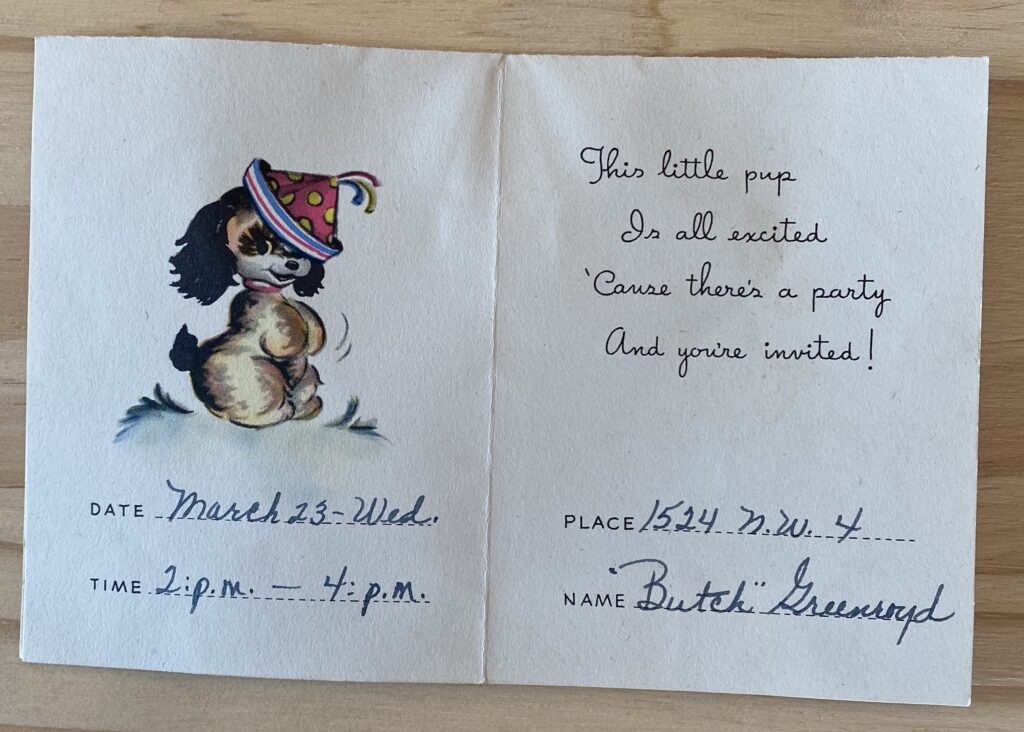
When opening the drawer that still works, we found the below invitation for Butch Greenroyd birthday party on March 23, 1949.
References
1. Express Plus, August 18, 1993 edition, on file with the Tuttle Historical Museum
2. Eula Copp Bowers (1899–2001), Find a Grave Memorial Eula Copp Bowers (1899-2001) – Find a Grave Memorial