The history of the Bank of Tuttle is inseparable from the history of the town itself. Established in 1903, three years before Oklahoma achieved statehood, the bank helped finance the growth of a young prairie community that was just beginning to take shape.
Organized by Perry and Dowden with an initial capital of $5,000, the Bank of Tuttle occupied a building on the northwest corner of Bond Street. A. P. Snelson served as the bank’s first president, overseeing the institution during Tuttle’s earliest years.
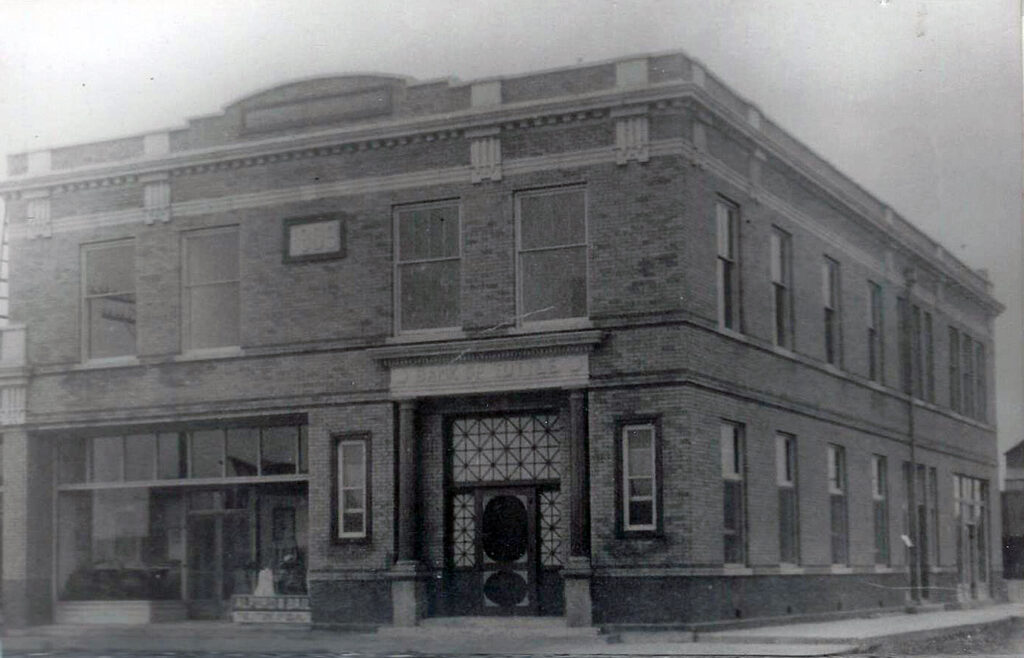
Disaster struck in 1908 when a devastating fire swept through Tuttle’s business district, destroying much of the southside of downtown. Like many businesses determined to rebuild, the Bank of Tuttle emerged stronger than before. In 1909, a handsome new two-story brick building was constructed on Main Street, becoming one of the town’s most prominent landmarks.
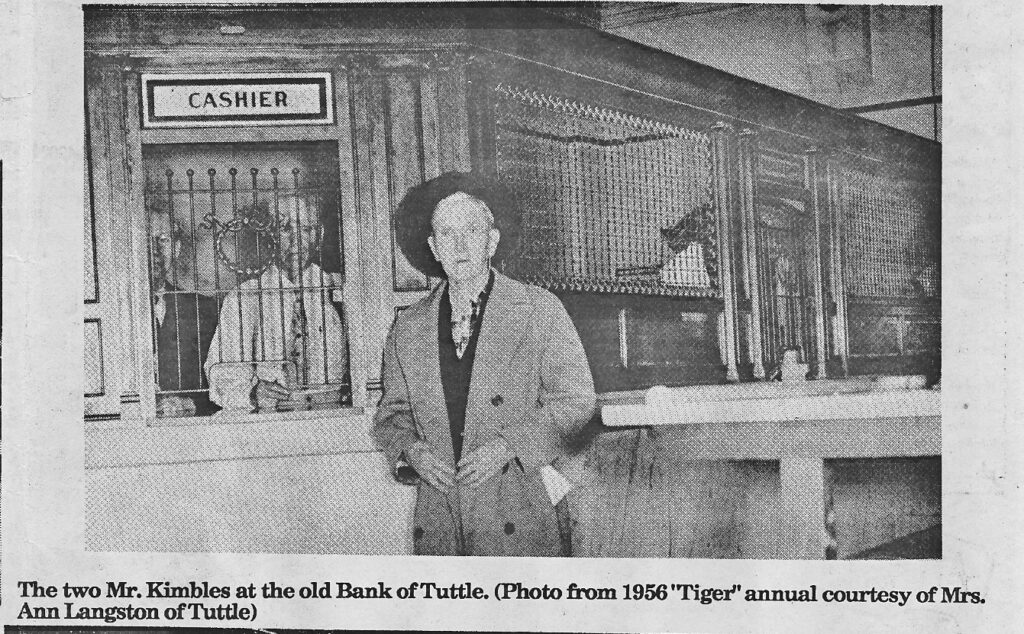
Ownership of the bank changed several times as Tuttle continued to prosper. The bank was purchased by Harve Green, Louis Meder, Thomas Waldon, and George Hosea, increasing its capital to $10,000. Just a year later, in 1910, Floyd and Forrest Kimball acquired the bank and expanded its capital to $25,000, reflecting the confidence and growth of the community.
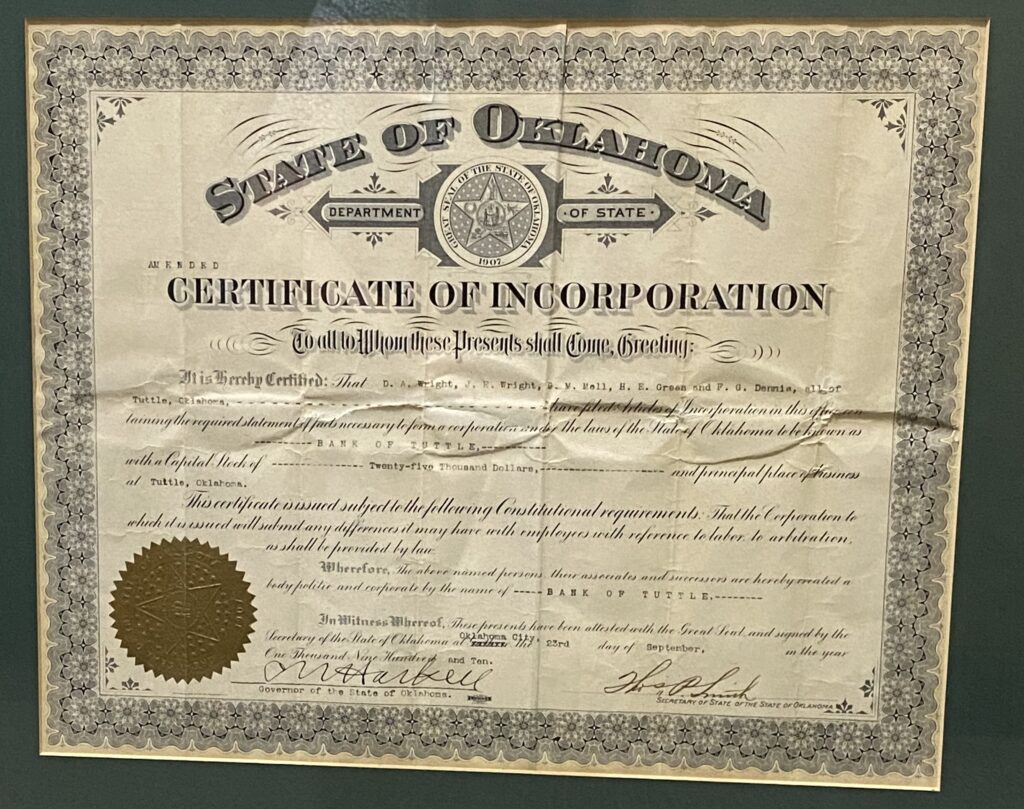
On September 23, 1910, only a few years after Oklahoma became the nation’s 46th state, Governor Charles N. Haskell signed the Bank of Tuttle’s official State of Oklahoma Certificate of Incorporation, a document that remains one of the bank’s treasured historical artifacts.
After serving Main Street for more than half a century, the Bank of Tuttle relocated in 1966 to its present location at 2 S.E. 4th Street, where it continues to serve the community today.
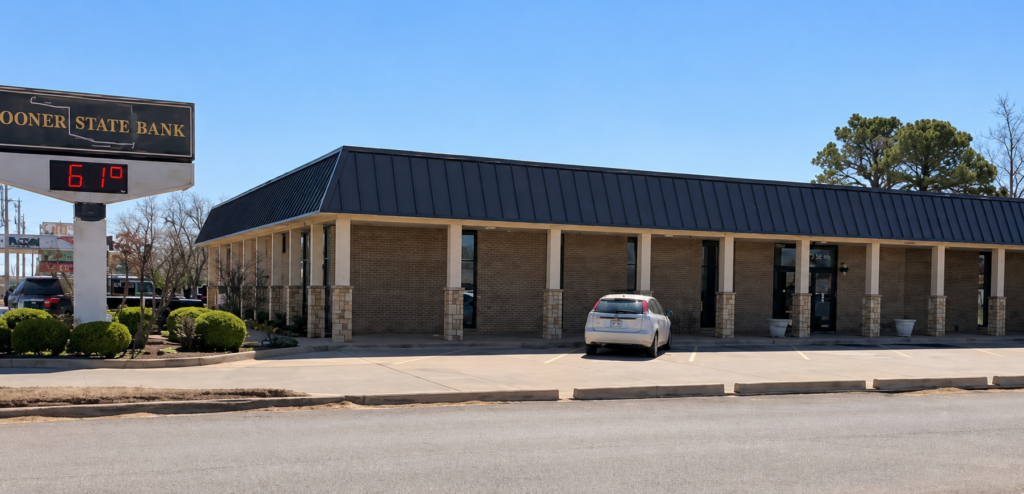
As banking expanded throughout central Oklahoma, the Bank of Tuttle merged with the First National Bank of Konawa, another institution with deep territorial roots dating to 1905. Because both banks had been chartered before Oklahoma achieved statehood, the organization adopted the name Sooner State Bank in August 1992, honoring their shared territorial heritage. At the time of the merger, the bank was primarily owned by the Frank R. Swan family. Frank R. Swan’s father, Frank P. Swan, had founded the First National Bank of Konawa in 1905.
Today, Sooner State Bank celebrates more than 123 years of continuous banking service in Tuttle, including over 60 years at its current location.
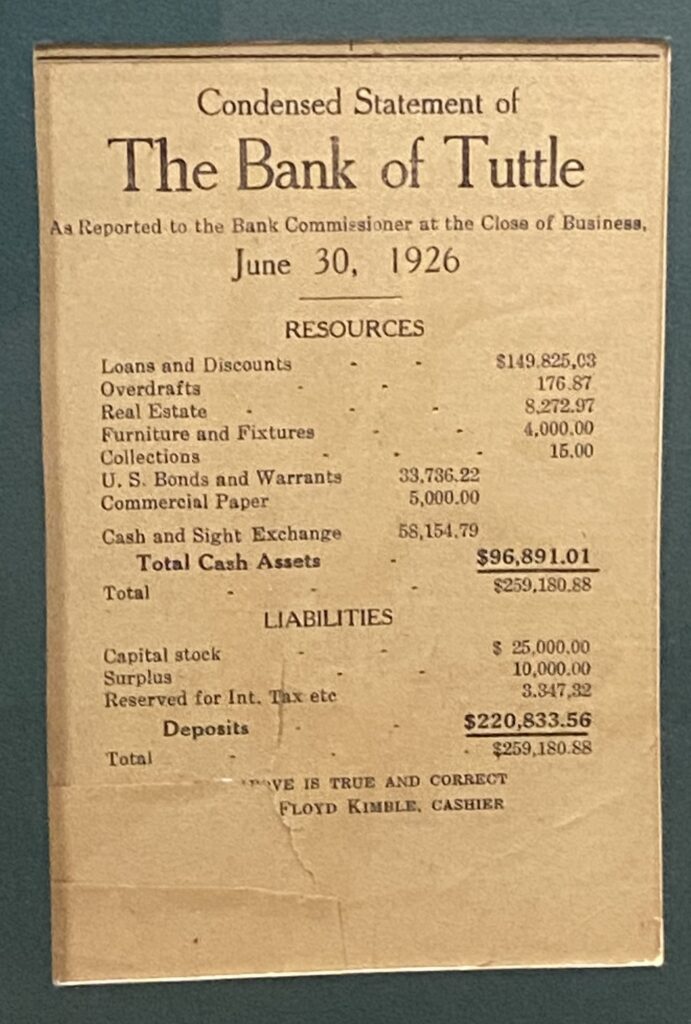
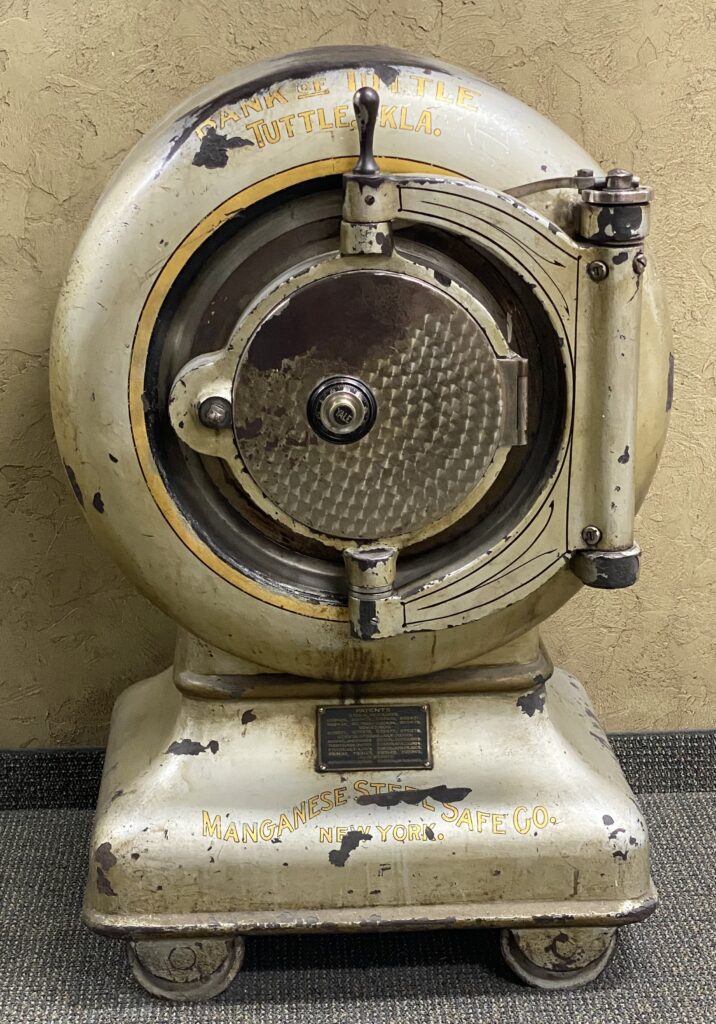
Visitors to the bank’s lobby can still view several remarkable pieces of banking history, including:
- The Bank of Tuttle’s original Manganese Steel Safe Company of New York safe.
- The State of Oklahoma Certificate of Incorporation, signed by Governor Charles N. Haskell on September 23, 1910.
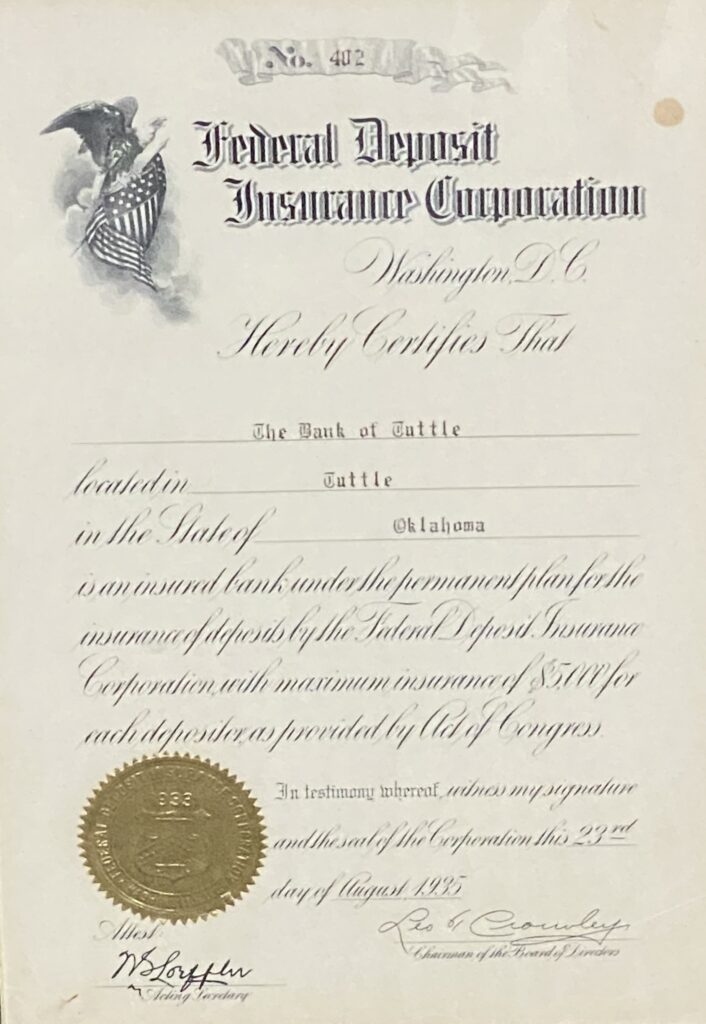
- The bank’s original Federal Deposit Insurance Corporation (FDIC) certificate, issued in August 1935, shortly after the creation of the FDIC during the Great Depression.
More Than a Bank: The Tuttle Opera House
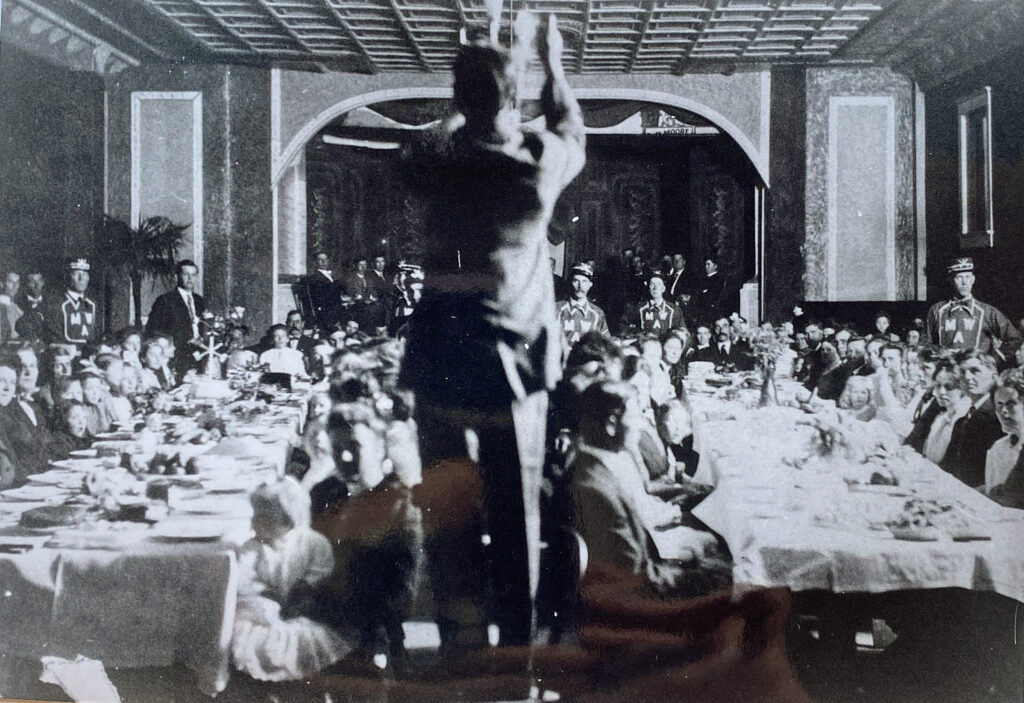
The historic Bank of Tuttle building served a purpose far beyond banking. Its second floor housed the Tuttle Opera House, one of the community’s earliest entertainment venues.
Traveling theater companies regularly performed plays there, while Saturday evenings brought silent motion pictures to eager audiences. Among the earliest films shown was Earthquake in San Francisco, introducing local residents to the exciting new world of motion pictures. Rooms along the upper floor facing Main Street also served as offices and residential apartments, making the building a true center of community life.
Restoration and Loss
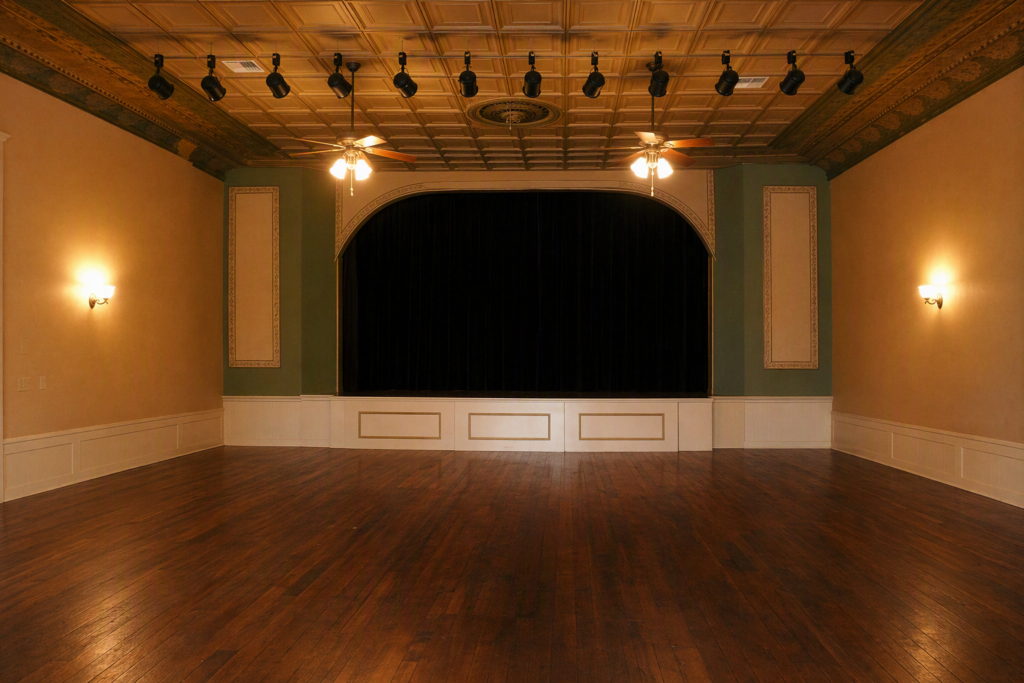
Nearly a century after it was built, the historic bank building found new caretakers in Lonnie and Misty Paxton, who carefully restored much of its original character. Their work preserved many remarkable architectural features, including the original pressed-tin ceilings, handcrafted wooden teller windows, and the massive built-in bank vault. Lonnie Paxton operated his insurance business from the restored building for several years.
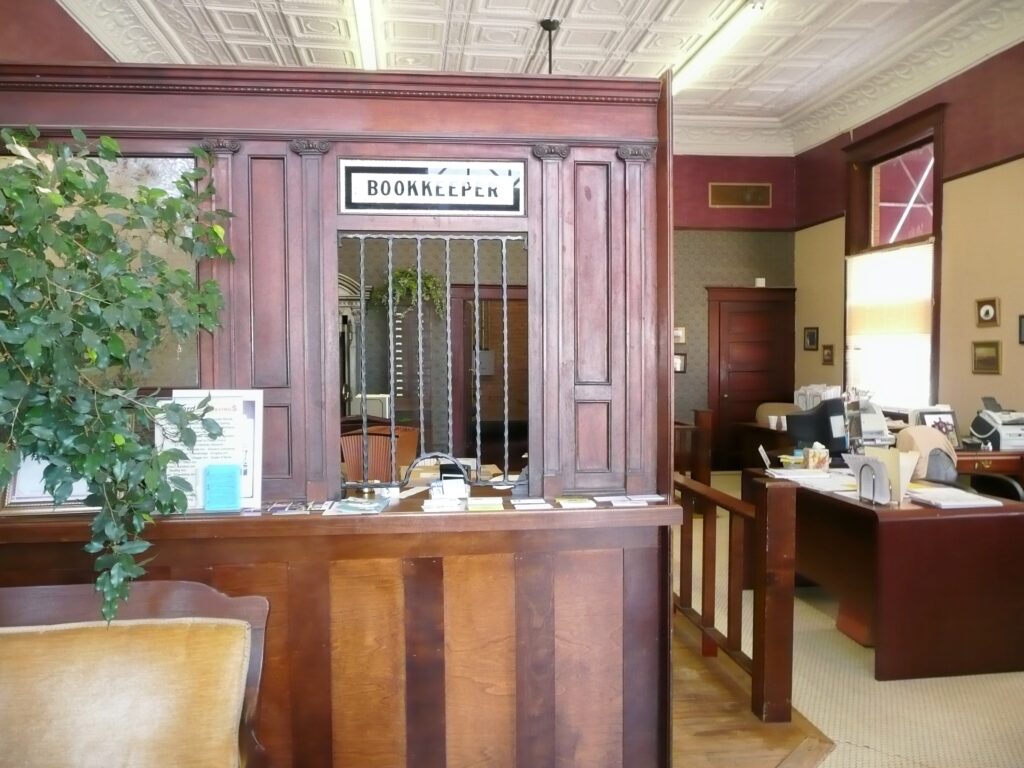
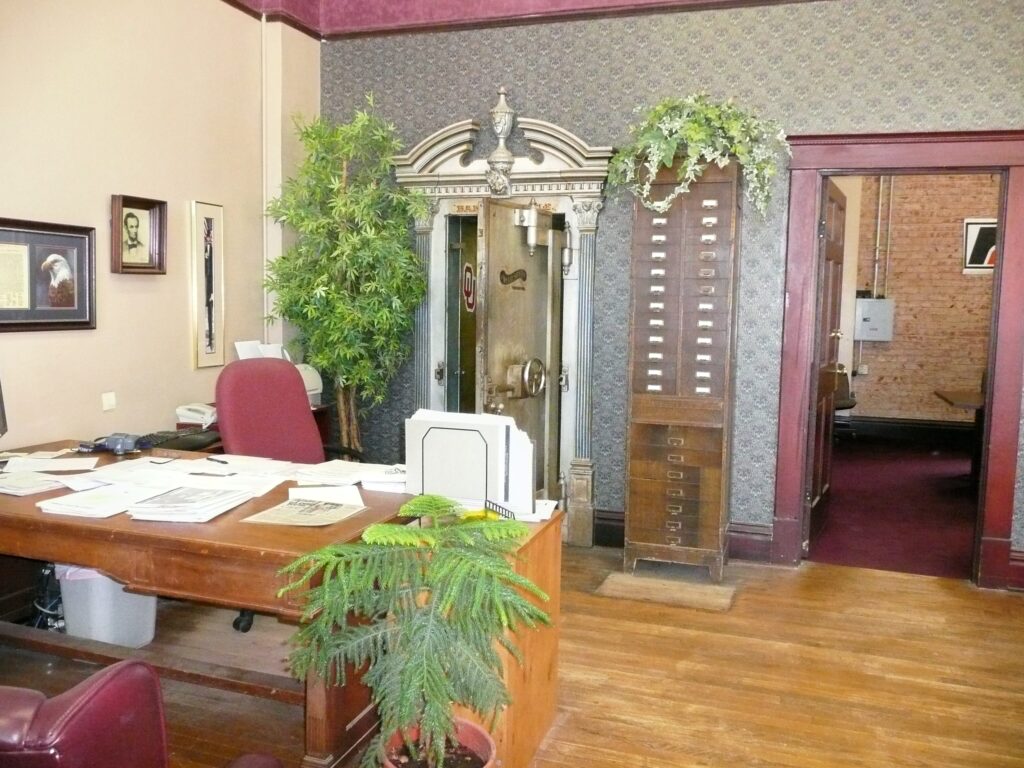
In the mid-2000s, the Paxtons transformed the former Opera House into Grady’s Restaurant, allowing visitors once again to gather inside one of Tuttle’s most historic buildings.
Tragically, in 2013, a fire that began in Grady’s kitchen caused extensive damage to the interior. Although the exterior brick structure survived, nearly all of the historic interior architecture—including the beautifully restored tin ceilings, original woodwork, and teller fixtures—was lost. The original bank vault remains as one of the few surviving interior features.
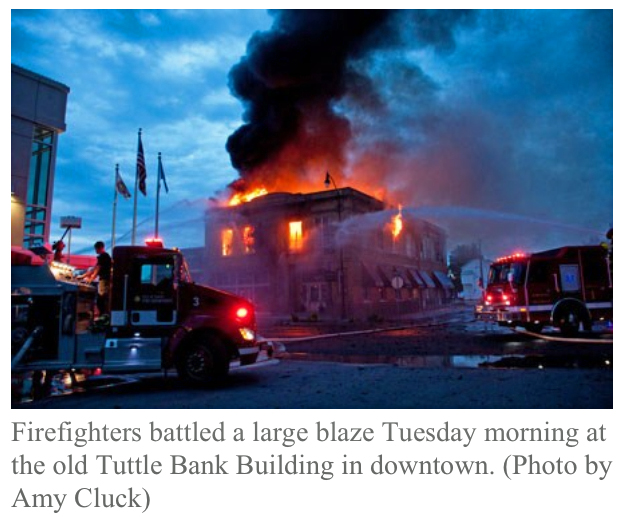

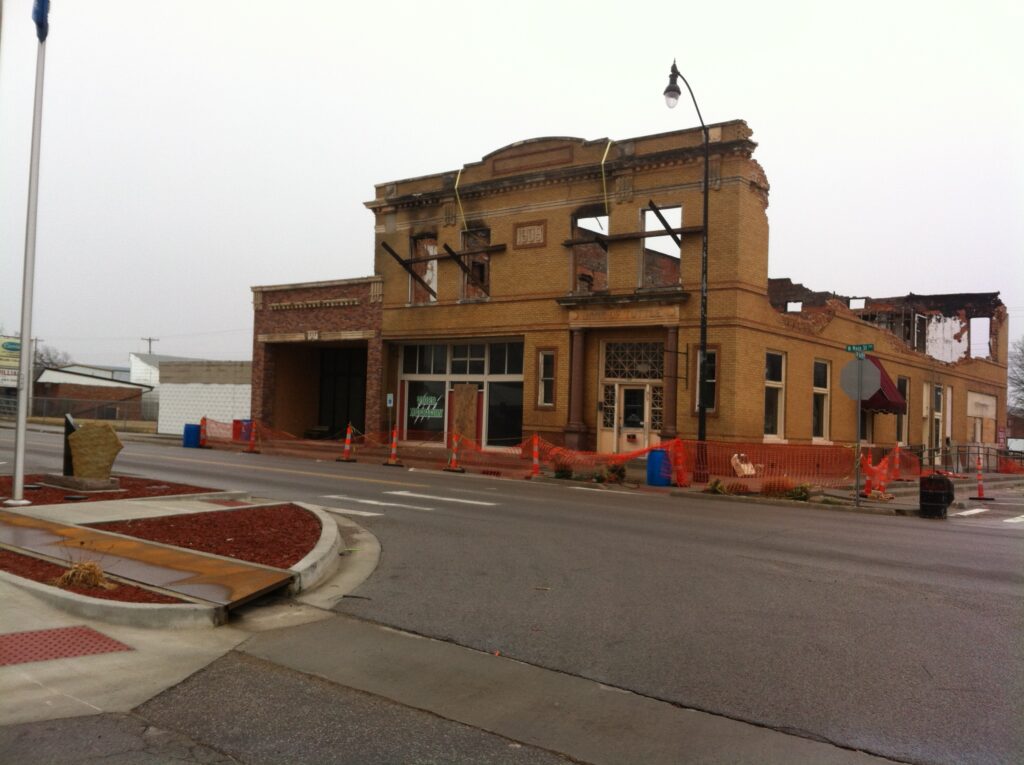
The building later sustained some exterior damage during a severe storm, but it continues to stand as one of Tuttle’s most recognizable historic landmarks. The Paxton family has expressed their desire to one day breathe new life into the building, preserving its rich history for future generations.
For more than a century, the Bank of Tuttle has been more than a financial institution. It has witnessed fires, economic booms and hardships, community celebrations, changing ownership, and the evolution of Tuttle from a small territorial town into the thriving community it is today. Its story is one of resilience, progress, and the enduring spirit of the people who built Tuttle.
References
- The Allen Ross Story; Available at the Tuttle Historical Society Museum
- Newspapers.com Historical Archives: The past: read all about it.
- Tuttle Times (2003)
- Sooner State Bank historical materials and lobby displays