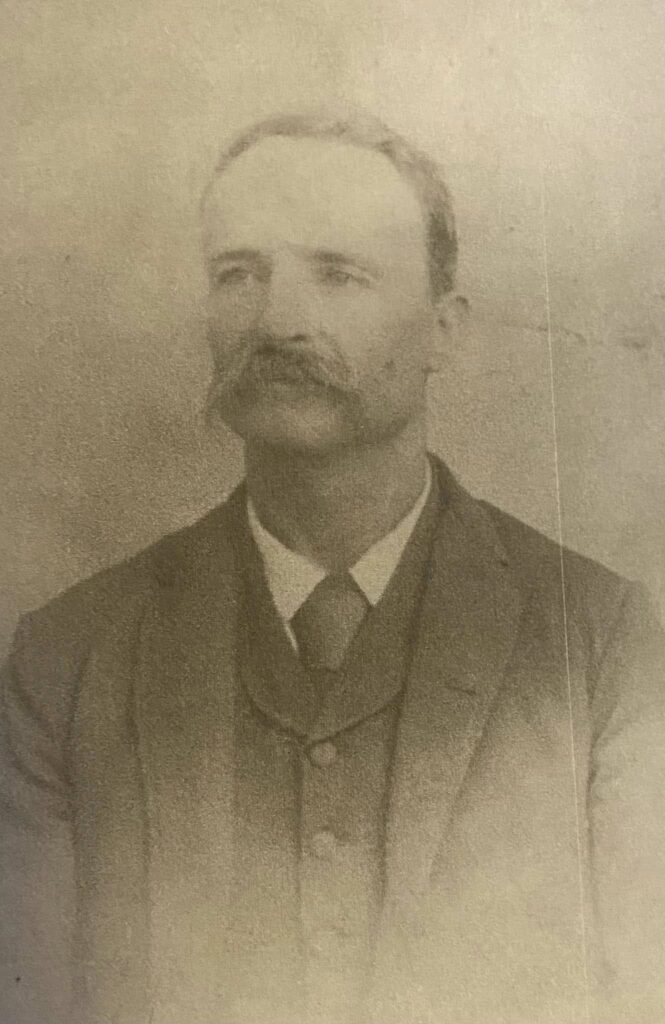
James H. Bond was born to John and Jennie (Underwood) Bond in Somersetshire, England, in 1842 and immigrated with his parents to the US in 1847. During the Civil War period, James was employed as a wagon master and was paid $1.25 per month. After the war, he entered the livery business in Pine Bluff, Arkansas. He also carried mail from Little Rock to Monticello, Arkansas.
Adelaide was born on the Blue River north of Tishomingo December 25th, 1841, to Rebekah (last name unknown) (of Chickasaw descent), her father Charles “Boggy” Johnson. Adelaide had one younger brother Montford T. Johnson. She met and married Michael Campbell in 1859, the brother of Mary Elizabeth Campbell. (Mary Elizabeth married Montford T Johnson in the fall of 1862) Adelaide and Michael had three children C.B., Katherine, and Ella.
James (Jim) arrived at Fort Arbuckle, Indian Territory, in 1869 and was engaged in the stock business until 1872. This is where he met Adelaide Johnson.
James and Adelaide established a home in Johnsonville, Indian Territory (later, Garvin County) until 1878 when they relocated to a ranch at Silver City. James and Adelaide were famous for their generosity. If the South Canadian River was up, cattlemen usually preferred to cross their cattle at the Bond crossing rather than the Chisholm Trail crossing. The Bod crossing, although a couple of miles west, was shallower and easier to negotiate in high water. Old-timers sang the praises of Adelaide’s never-empty kitchen table and marveled at the amount of food she and her help could put out when the trail crew came by. She would nurse men, usually total strangers, who were wounded or had become sick on the trail.
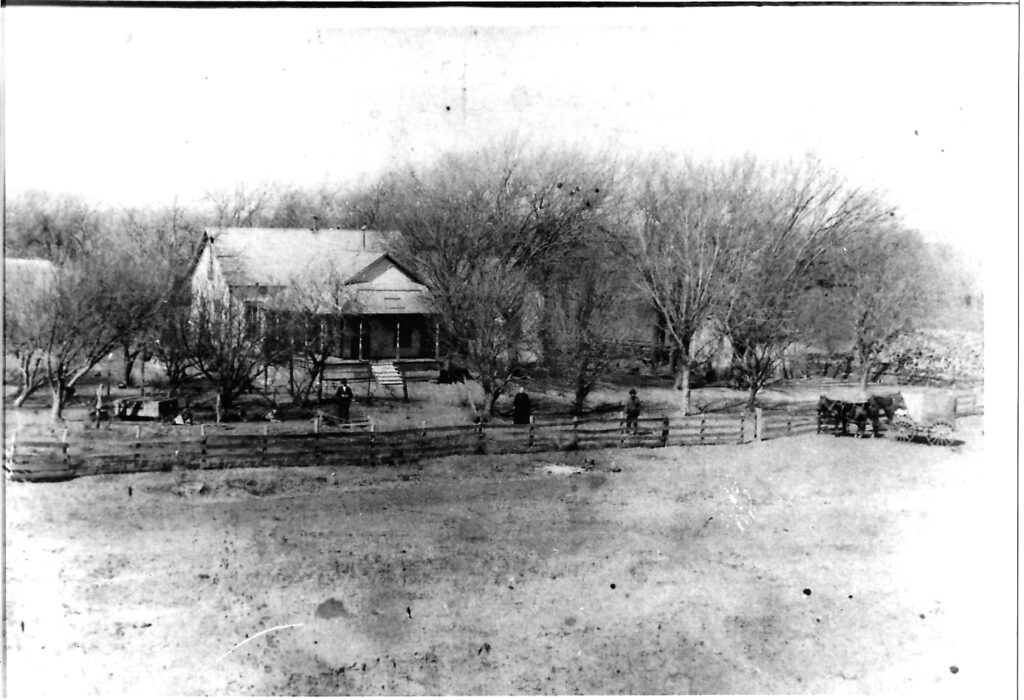
James (Jim) was also revered for his helpful ways. Helping neighbors in distress with a loan, helping hand, or spot a young cowboy a few dollars to get through the end of the drive. It’s said that “There was never a man along the trail who did more for his fellow man than J.H. Bond. Money, cows, mules, horses, hogs, feed-when a man needed them, he headed for Mr. Bond, and none came away empty handed. The Bond home was appropriately named, “Happy Hollow”
As one of the wealthiest men in Indian Territory, James owned 2,000 acres and bred Thoroughbred trotting horses. He complimented farming, real estate, and breeding interests with part ownership of Minco Elevator Company. He also held stock in the Bank of Minco.
Adelaide Bond was widely known and respected in Grady County for her hospitality and philanthropy. She co-founded and was a benefactor of El Meta Bond College in Minco.
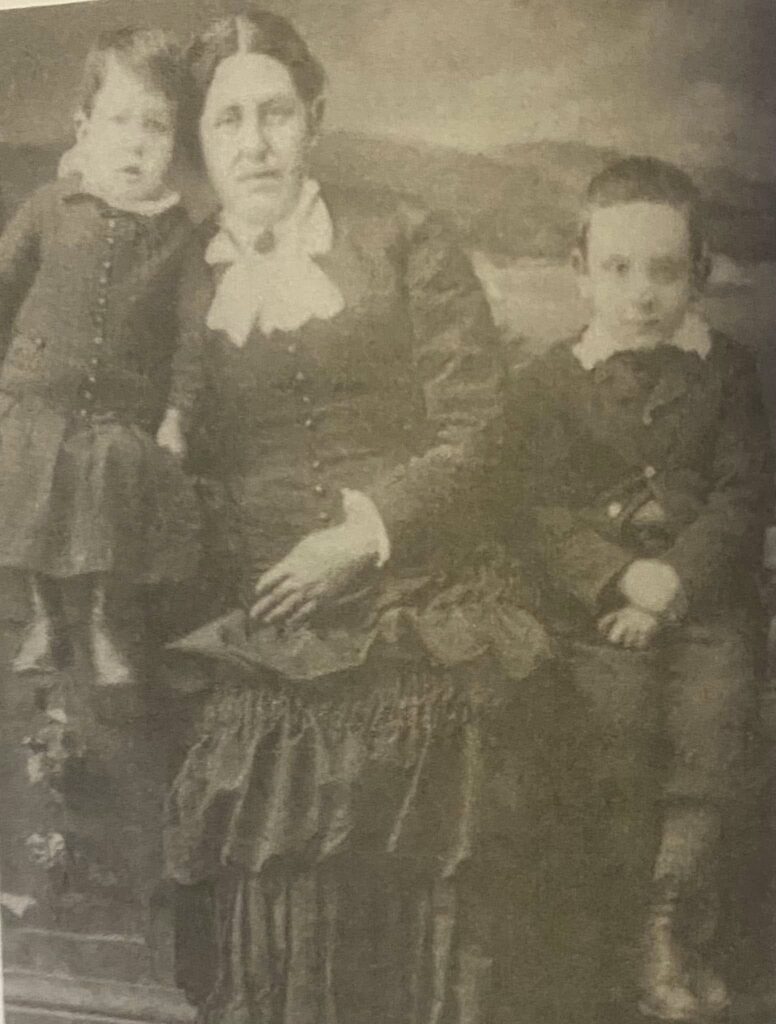
James and Adelaide Bond had three children; Reford, who became a prominent and successful lawyer; Edward; and Nora. Nora married James H. Tuttle of Minco, Indian Territory, and died of unknown causes. Reford, who was born on August 10, 1877, practiced law in Chickasha. He went to school in Boonville, Missouri, and attended Roanoke College in Virginia and Columbia University. He enrolled in law school at the University of Missouri and graduated in 1897. Reford complimented his law practice by investing in real estate and joining the board of directors of the First National Bank of Chickasha. He was appointed as the Chickasaw Nation’s representative to the US government. In 1934 Governor E. W. Marland appointed him to the Oklahoma Corporation Commission. He served until his death in 1954.
The Bonds’ ancestral home was located on the Canadian River west of Silver City (near present-day Tuttle) on what became known as Happy Hollow or Bond Crossing. The area was a popular resting place on the Chisholm Trail.
Reference Material from: Oklahoma Historical Society Family Tree Stories, https://www.okhistory.org/ The Chickasaw Rancher Revised Edition